1930
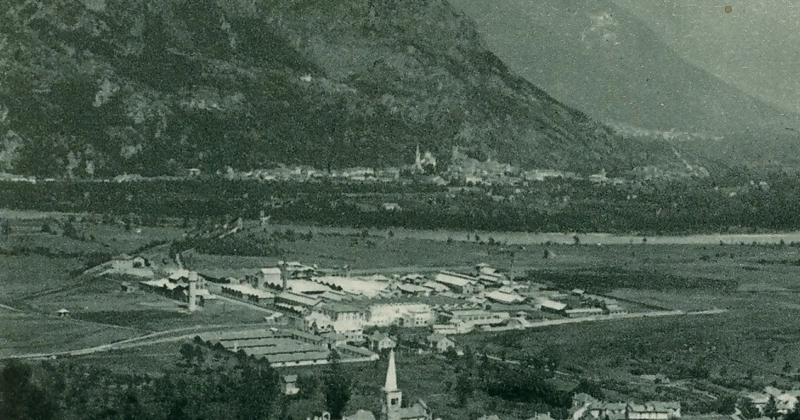
Due to the economic sanctions imposed on Italy and the resulting economic self-reliance, RUMIANCA began mining operations in Val Toppa, Valle Anzasca, and Valle Antrona. Using arsenic trioxide obtained from arsenopyrite in gold mines, it started the production of formulated fungicides and copper sulphate. From iron pyrites, sulphur dioxide was extracted for the production of sulphuric acid and Oleum. A gold-dedicated department was also set up for the extraction of the precious metal through roasting and cyanidation processes. Since 1930, the company’s CEO had been Commendatore Ferdinando Ravazzi, who would later lead Rumianca to become publicly listed on the Stock Exchange.
1939
To ensure a sufficient supply of electricity, RUMIANCA began the construction of the Megolo hydroelectric power plant, producing about 8,000 kWh, by diverting water from the Toce River through the Masone dam. A smaller plant in Piedimulera produced an additional 2,500 kWh.
1940–1945
During World War II, the company signed a cooperation agreement with the Military Chemical Centre for the production of chemical agents, smoke generators, and fogging devices. A new chlor-alkali plant was installed, equipped with 68 mercury cells, with a daily production capacity of 30 tons caustic soda and 27 tons chlorine. The industrial area was expanded by 200,000 m2, and new plants were built for sodium metal, DCA, DFA, phosgene, formic acid, as well as a new chlorobenzene unit.
A residential compound was built for the workforce, with twenty buildings housing 90 flats, as well as cottages for executives, a recreational centre with a hotel and cinema hall, a modern on-site infirmary, a gym, a shower facility with changing rooms, and a new main office block. The company canteen was renovated and expanded to serve up to 1,000 meals per day.