Established in January 2024, Altair Chemical joins the operations of two long-standing Italian chemical plants, whose roots date back to the early and mid-20th century.
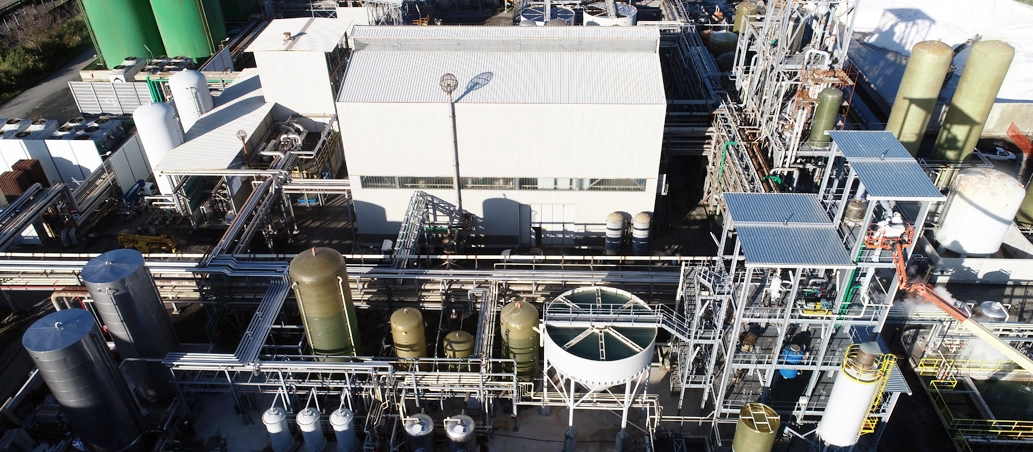
In January 2024, through the merger of the companies managing the Saline di Volterra (PI) and Pieve Vergonte (VB) production sites, Altair Chemical became a leading organic and inorganic chemistry hub. As part of Esseco Industrial, it specializes in chlor-alkali, inorganic potassium derivatives, and organic chlorine derivatives.
The integration of both entities allows for maximized production capacity, streamlined industrial processes, and enhanced market competitiveness through shared logistics and storage management system.
This merger represented a key milestone in Esseco Industrial’s strategy to consolidate its presence in the chlor-alkali sector, fostering stronger synergies between the sites and promoting a more efficient, innovative, and sustainable production model.
Altair Chemical thus embodies a stronger and more coordinated company, ready to meet the challenges of the modern chemical industry with responsiveness and responsibility.
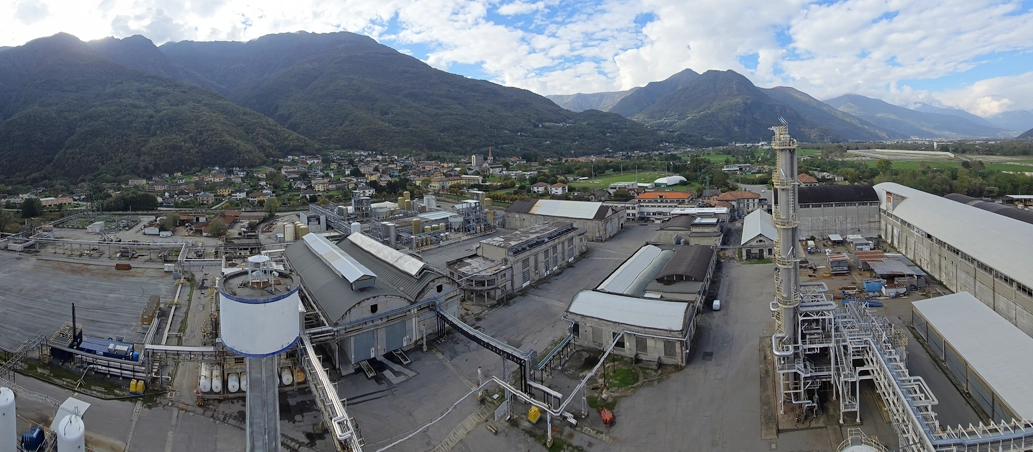
In 2019, Esseco Group acquired the Pieve Vergonte plant, taking it over through a ministerial crisis committee, integrating it into its chlor-alkali production hub and using the energy generated by the Megolo and Ceppo Morelli hydroelectric power plants for its operations.
In 2021, a major investment plan worth over €50 million was completed to revamp the site, transitioning it to membrane-cell technology, completely removing mercury from production processes and enhancing environmental sustainability.
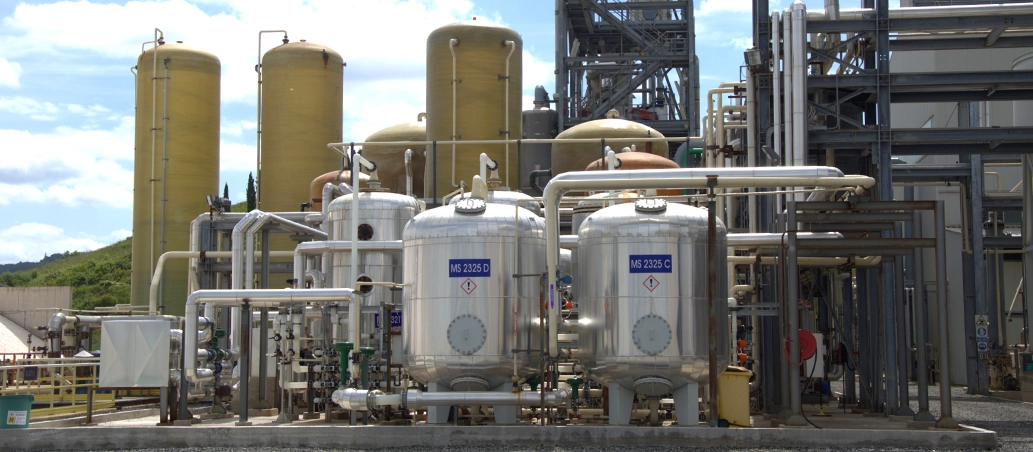
In 2011, the Saline di Volterra plant became part of Esseco Group, consolidating its production of potassium hydroxide (KOH). The following year, the site confirmed its commitment to an energy saving process by starting up a 4.5 MW cogeneration plant, which also enables the recovery of carbon dioxide (CO₂) for potassium carbonate (K₂CO₃) production and hydrogen (H₂) for internal green energy generation.
In 2013, the company entered the organic chemistry sector with the production of chlorinated paraffins (Essechlor), thus expanding the Saline site. In 2015, production capacity further increased to 55,000 tpy of chlorine and 87,000 tpy of 100% potassium hydroxide.
In 2017, new plants were installed for 10,000 tpy of flaked KOH, a 3,000-ton/year pilot plant for food-grade solid potassium chloride (KCl), and a plant for sodium hydroxide (NaOH) solution.
In 2018, Altair Iberica was established.
In 2005, an agreement was entered into with the Italian Ministry of the Environment and the EU to remove mercury from processes and reduce water and energy consumption. In 2008, the company built Europe’s first greenfield membrane-cell plant for mercury-free potassium hydroxide production, reducing electricity consumption by 30% and water intake by 40%. In 2010, process streamlining began and a new hydrochloric acid production line was added.
In 1995, the Saline di Volterra industrial facility became Altair Chimica S.p.A., an entirely Italian-owned company.
In 1993, Società Chimica Larderello transitioned to private ownership and was sold to the D.G. HARRIS financial group based in New York.
In 1974, the Saline plant became fully owned by ANIC-ENICHEM and later SAMATEC, both within the ENI Group. Maintaining electrolysis-related activities, the company focused on potassium chemistry and chlorine processing for sanitation and water treatment.
In 1966, the chemical plants in Saline di Volterra and Larderello were merged into Società Chimica Larderello (SCL), which became property of ANIC-ENI-SOLVAY.
In 1959, Larderello S.p.A., a private company with plants in Larderello (Pisa), built a chlor-alkali production plant in Saline di Volterra. On 6 July, the President of the Republic, Giovanni Gronchi, laid the first stone of the new chemical plant.
In 2013, the plant was sold to the German holding I.C.I.G. and renamed HydroChem Italia. The toluene chlorination, chlor-alkali, and hydrochloric acid synthesis lines remained operational. Meanwhile, a portion of the site owned by Enichem (Eni Rewind) underwent environmental remediation.
EU Regulation 2017/852 on mercury required the complete shutdown of the electrolysis plant by 2017, as it was non-compliant with BATs (Best Available Techniques). The plant ceased operations on 11 December, also discontinuing hydrochloric acid production. Workforce reduction led to rotating extraordinary wage guarantee funds (CIGS) in the years 2018 and 2019.
In 1997, the Pieve Vergonte plant was sold to Tessenderlo Italia S.r.l., a French-Belgian company. The new ownership made significant investments in upgrading and environmental remediation, especially involving the hydroelectric power stations. However, the site gradually shut down most of its production lines over time.
In 1981, Rumianca was close to permanent shutdown when the SIR Group experienced severe financial difficulties.
The Italian government intervened, leading to approval of a restructuring plan for the SIR-Rumianca Group. The Pieve Vergonte plant was transferred to ANIC (ENI Group), which set up a subsidiary, Enichimica Secondaria S.p.A. (later Enichem Sintesi S.p.A.) in 1983. Rumianca S.p.A. was wound up.
In 1967, the SIR Group, led by Angelo “Nino” Rovelli, acquired a majority stake in Rumianca, thus becoming its majority shareholder. The company joined the SIR-Rumianca Group, and its head office moved to Milan.
Between 1946 and 1954, Rumianca launched major investments in research, facilities, and production, whereby it set up a Research & Development laboratory, began producing compound fertilizers, and built the Ceppo Morelli hydroelectric plant. New plants were installed for synthetic ammonia, sulphuric acid, DDT, herbicides, chlorine, and many other chemical products, raising fertilizer production to 25,000 tons. To address energy shortage, a thermal power station was also built. In 1964, after Riccardo Gualino passed away, the company faced a financial crisis.
In the 1930s, Rumianca began mining operations and installed plants to produce sulphuric acid, Oleum, and agrochemicals. The Megolo hydroelectric power station was built to ensure energy self-reliance. During WWII, the company collaborated with the Military Chemical Centre, expanding the site and installing new plants for chlor-alkali and other strategic compounds. Housing, a canteen, and employee facilities were constructed.
Established in 1915 as “Stabilimento di Rumianca Ing. A. Vitale,” the plant aimed to produce chlor-alkali using the hydropower of the Ossola Valley. In the early years, other production lines were also started, including sulphuric acid and carbon tetrachloride.
In 1922, Rumianca joined the SNIA Viscosa Group, further expanding its chemical production under the leadership of Ostilio Severini, Eng..