Since 2014, Altair Chemical has been actively involved in national and regional R&D initiatives, leveraging strategic collaborations with universities, the National Research Council of Italy (CNR), and highly specialized consultants.
These partnerships, often supported by substantial funding, provide access to advanced scientific knowledge, cutting-edge technology, and innovative process methods, contributing to the continuous improvement of production processes and environmental sustainability.

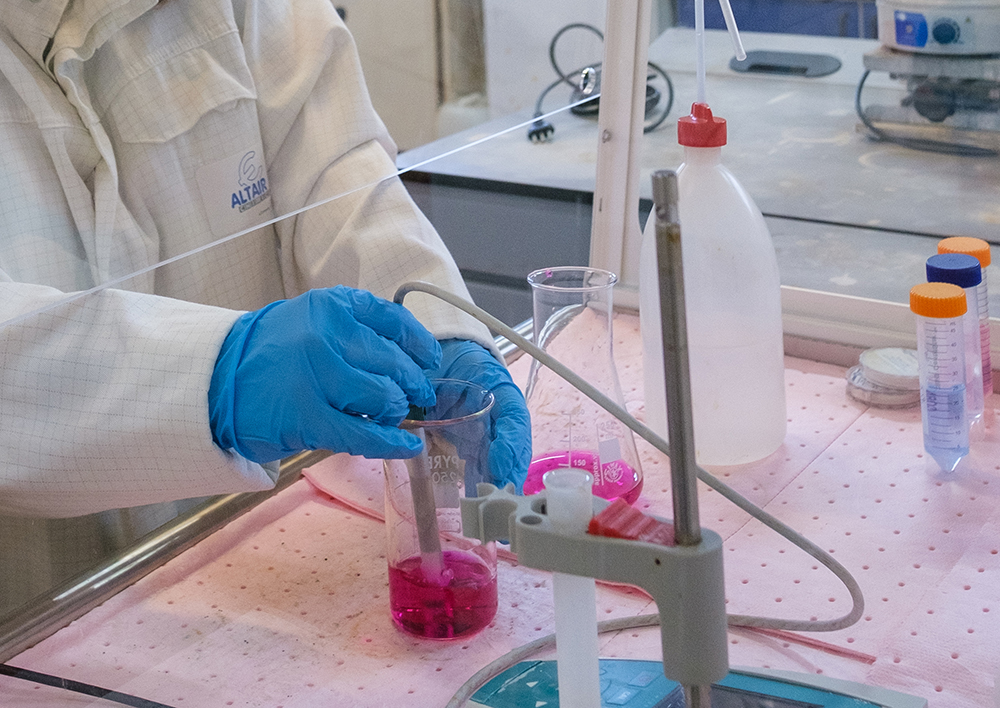
Within our production sites, Research and Development is a cornerstone of innovation and competitiveness. Our laboratories are dedicated to the advancement of inorganic and organic chemistry, with the goal of developing safer and more efficient solutions.
The main focus is on improving environmental sustainability, by streamlining production processes, reducing ecological impact, and using renewable raw materials. In addition, we aim to enhance circularity by promoting resource reuse and waste minimization, in compliance with circular economy principles.
As part of the “Major R&D Projects – ICT, Digital Agenda and Sustainable Industry” plan, this project led to the construction of a flake potassium hydroxide production plant and the integration of carbon footprint reduction systems, including the valorisation of CO₂ for efficient potassium carbonate synthesis.
The project also introduced circular processes for ferric chloride generation and innovative solutions for the photochlorination of organic compounds, as well as improvements to the wastewater treatment system.
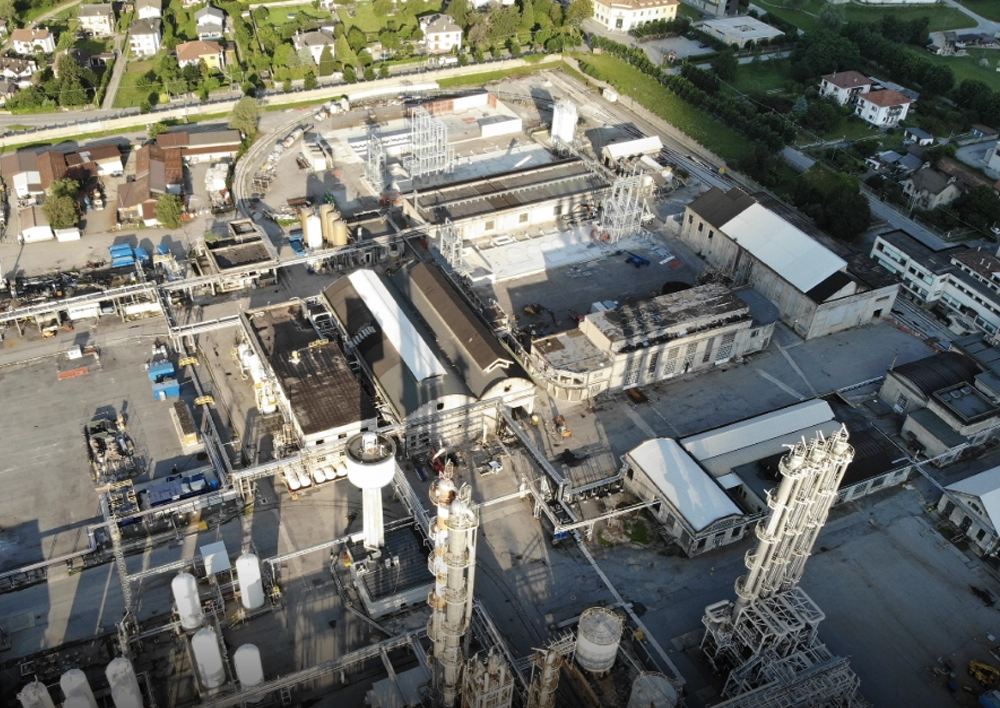
The “Relaunch Electrolysis–Building Optimized Rumianca New Site” project turned around the Pieve Vergonte site, focusing on sustainable technologies for chlor-alkali production.
It involved the development of low environmental impact processes, advanced industrial production technology, and alternative productions in the segment of aromatic compounds. Launched in 2019, it received €11.7 million funding from the Ministry of Economic Development and was completed in 2022.
Supported by the RSI – POR FESR 2014–2020 plan set up by the Tuscany Regional Authority, this R&D initiative boosted production capacity by 50% at the Saline di Volterra site.
Research focused on a new electrolysis line for caustic potash, an innovative process for ferric chloride production for water purification, chlorinated paraffin production, and HCl synthesis streamlining. Ultrasound technology was tested to accelerate chemical reactions, and logistics automation and safety systems were upgraded.

The second RSI-funded project focused on energy efficiency in production processes.
The initiative turned greenfield sites into solid potassium hydroxide and sodium hydroxide generation facilities, in accordance with Industry 4.0 standards. It also included pilot plants for the production of epichlorohydrin and potassium sulfate, supporting innovation and sustainable chemical manufacturing.

Being the third initiative under the POR FESR 2014–2020 plan, it focused on developing eco-friendly organochlorines with a low carbon footprint and designing an innovative continuous photochlorination system.
The project also involved producing pharmaceutical-grade potassium chloride and implementing water reuse solutions, reducing groundwater withdrawal from the Cecina River. A smart app was developed to digitise and streamline information flow across company departments.