Assessing the effectiveness of wastewater treatment alone is not enough: it is essential to consider the quality of the chemicals used and their impact on sewage sludge, particularly in relation to its potential agricultural use.
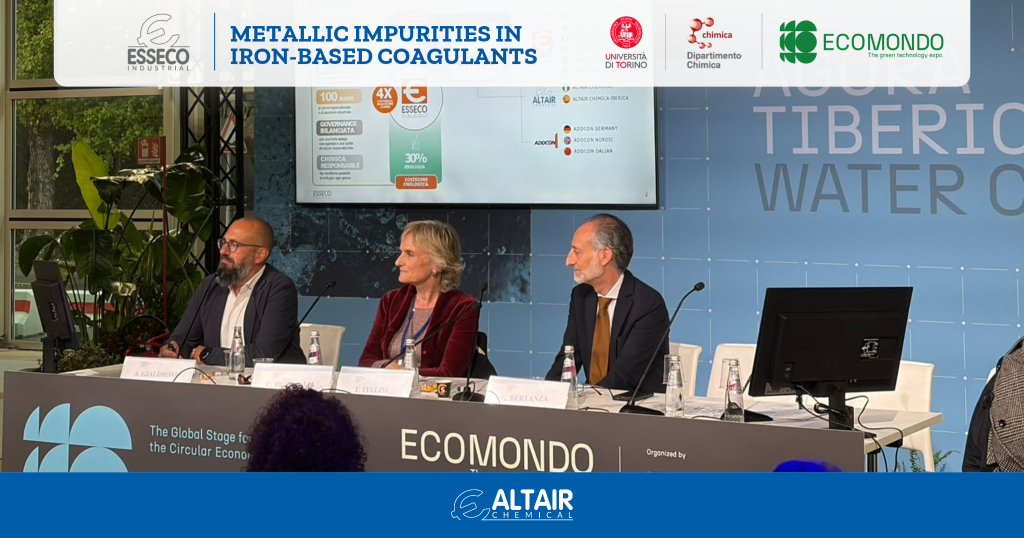
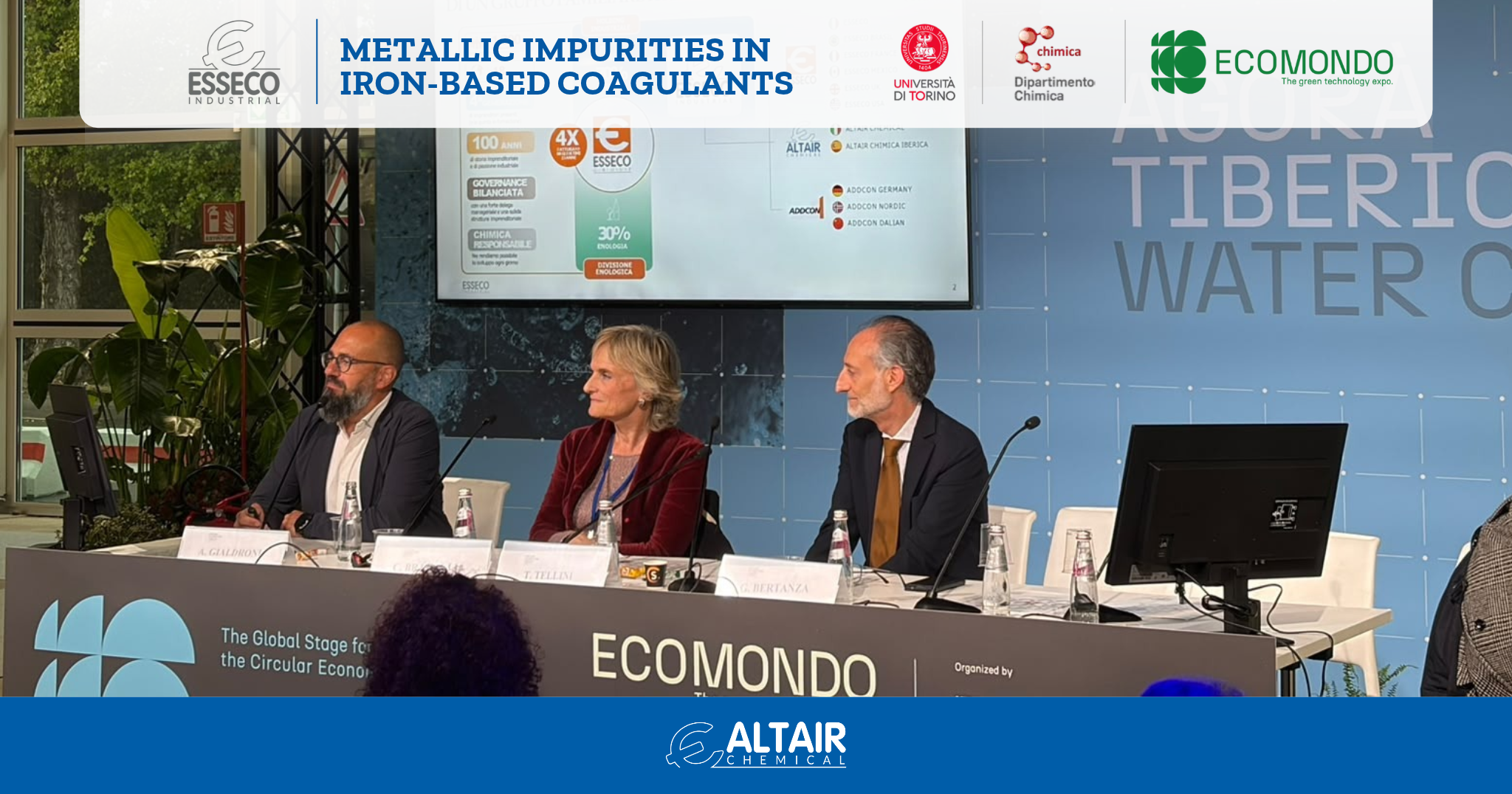
This was the key message of the presentation delivered at ECOMONDO 2026 in Rimini by Andrea Gialdrone, from Altair Chemical’s Commercial Department, as part of the Call for Papers programme.
The presentation, entitled “Metal Impurities in Iron-Based Coagulants: Implications for Sludge Quality and the Sustainability of Wastewater Treatment”, highlighted the findings of a research study conducted by the Department of Chemistry at the University of Turin, with the support of Altair Chemical.
What are the key findings of the study?
Metal impurities present in iron-based coagulants are predominantly transferred to the solid phase during treatment, contributing to the contaminant load in sewage sludge.
Under the conditions examined, the use of coagulants with high impurity levels can result in a contaminant load up to approximately 20 times higher for lead, 12 times higher for nickel and 4 times higher for cadmium, compared with higher-purity chemicals.
What are the implications for the agricultural use of sewage sludge?
Sewage sludge can represent a valuable resource for agriculture through the recovery of organic matter and nutrients. However, its use is subject to compliance with specific quality requirements and limits on contaminants.
An increased input of heavy metals from coagulants can therefore limit the potential for agricultural recovery and use of sewage sludge, reducing opportunities for resource recovery within a circular economy framework.
The quality of treated water and that of the resulting sludge are two aspects of the same process. The selection of coagulants must therefore take into account not only treatment efficiency, but also the impurities introduced and their ultimate fate.
This focus on quality is also reflected in Altair Chemical’s industrial expertise in producing high-quality ferric chloride through processes that recover and valorise secondary materials. This approach was recognised at Ecomondo 2024, when the company was among the ten Italian organisations awarded recognition in the Circular Economy category of the Sustainable Development Award.
Scientific research and innovation in production processes thus contribute to a shared objective: more effective and sustainable wastewater treatment, from water quality to the potential recovery and agricultural use of sewage sludge.